Why AI Has Disadvantages and Why Humans Are Still Important
Artificial Intelligence (AI) is transforming the world. From automation to data analysis, AI is helping businesses improve efficiency and productivity. Many industries such as healthcare, finance, recruitment, and customer service are increasingly using AI tools. However, despite its many advantages, AI also has several limitations. This is why human intelligence, creativity, and emotional understanding remain extremely important.
1. Lack of Human Judgment
AI works based on algorithms and data. It analyzes patterns and gives responses based on the information it has been trained on. However, AI cannot fully understand complex human situations.
For example, in recruitment, an AI tool may reject a candidate based on keywords missing in the resume. But a human recruiter can understand the candidate’s real potential, attitude, and cultural fit for the company. Human judgment helps organizations make better decisions that AI alone cannot provide.
2. No Emotional Intelligence
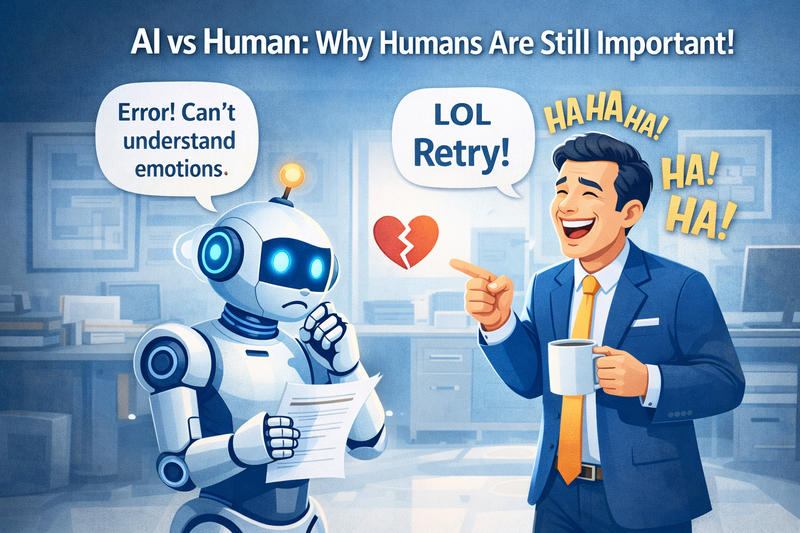
One of the biggest disadvantages of AI is the absence of emotional intelligence. AI cannot truly understand emotions such as empathy, motivation, or personal struggles.
Humans can:
Encourage someone during difficult times
Understand emotions in conversations
Build trust and relationships
In professions like recruitment, leadership, teaching, and counseling, emotional intelligence plays a critical role. AI cannot replace the empathy and understanding that humans provide.
3. Limited Creativity
AI can generate ideas based on existing data, but true creativity comes from human imagination and experience. Humans can think outside the box and create innovative solutions.
For example:
Writers create original stories and perspectives.
Entrepreneurs build new businesses based on vision.
Recruiters develop new hiring strategies.
AI can assist in these tasks, but the original ideas and strategies still come from human minds.
4. Ethical and Moral Decisions
AI does not understand ethics or morality the way humans do. It simply follows programmed rules and data patterns.
Humans are needed to make decisions involving:
Fairness
Ethics
Social impact
For instance, in hiring decisions, humans ensure diversity, fairness, and equal opportunity, which AI systems might sometimes overlook.
5. Dependence on Data
AI can only work with the data it is trained on. If the data is incomplete or biased, the AI results will also be inaccurate.
Humans are necessary to:
Verify information
Correct errors
Improve systems
Without human oversight, AI systems may make incorrect or unfair decisions.
The Future: AI and Humans Working Together
The future is not about AI replacing humans; it is about collaboration between AI and human intelligence. AI can automate repetitive tasks, analyze large amounts of data, and improve efficiency. Humans, on the other hand, bring creativity, emotional intelligence, judgment, and ethical decision-making.
The best results come when humans use AI as a tool rather than a replacement. Organizations that combine the power of AI with human expertise will be more successful in the future.
Conclusion
AI is a powerful technology, but it cannot replace the unique abilities of human beings. Human creativity, emotional understanding, ethical thinking, and judgment remain irreplaceable. While AI will continue to grow and evolve, humans will always play a critical role in shaping technology and ensuring it benefits society.
In the end, AI should support human potential—not replace it.
Comments
No comments yet. Be the first to comment!